


Digital Twins and the Future of Smarter Power Plants
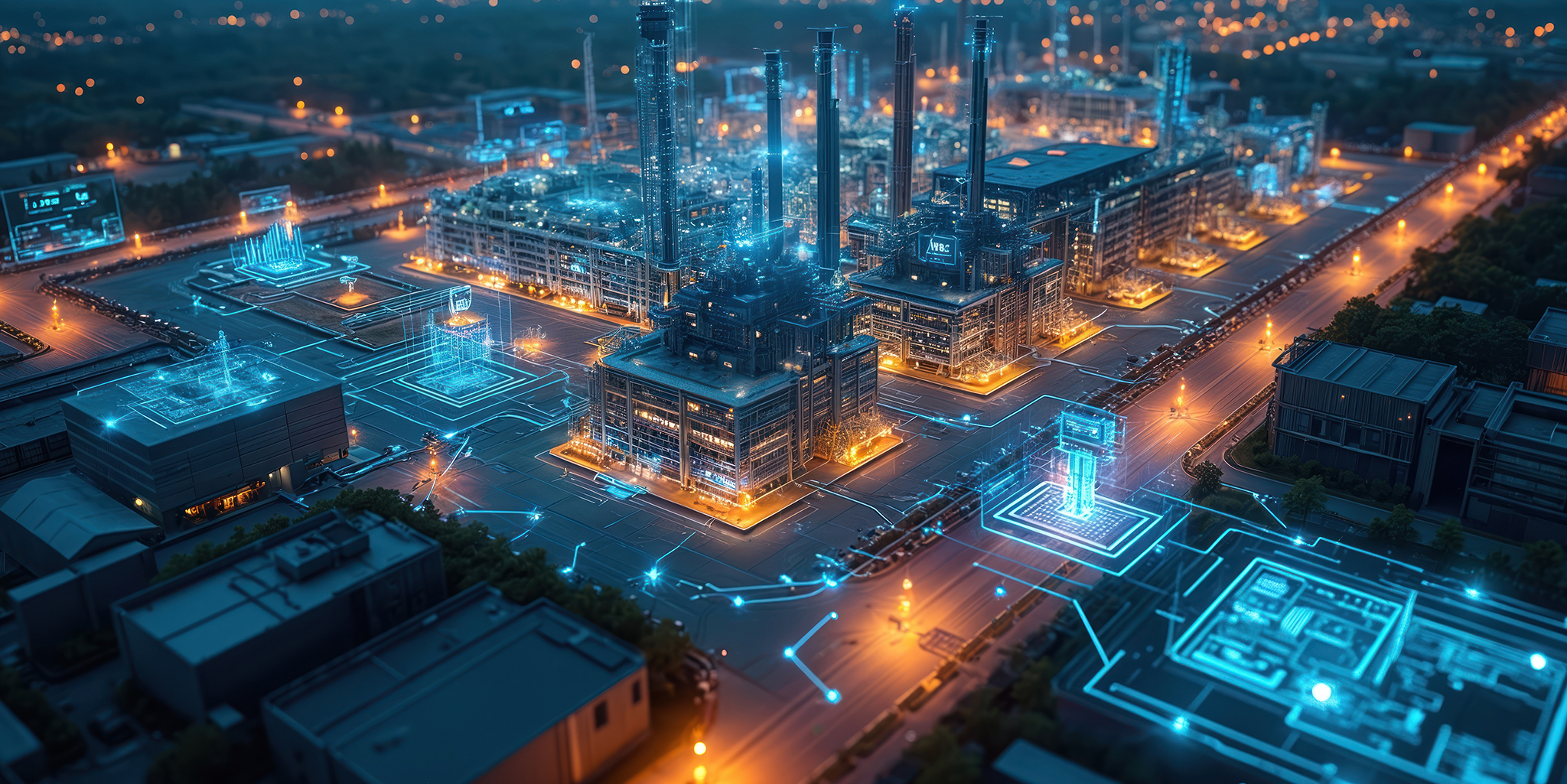
In an industry where a single unplanned outage can cost millions, the ability to predict problems before they occur is becoming a significant competitive advantage. This is one of the key reasons digital twin technology is attracting growing attention across the power generation sector.
The power generation industry is going through a significant shift. Advanced digital technologies are changing how power plants are designed, operated, and maintained, and among these, digital twin technology stands out as one of the most consequential.
A digital twin is a dynamic virtual model of a physical asset or system that continuously updates using real-time operational data, historical records, and engineering models. Unlike a static simulation that is run once and set aside, a digital twin remains synchronised with the physical system throughout its entire operating life. This gives plant operators enhanced visibility into asset behaviour, early warning of developing issues, and the information needed to make better decisions faster.
In large-scale thermal power plants, which remain central to grid stability and baseload electricity supply in many parts of the world, the adoption of digital twins is becoming increasingly relevant. These plants operate under growing pressure. Infrastructure is ageing, operating and maintenance costs are rising, environmental regulations are becoming more stringent, and the demand for flexible operation continues to increase.
All this places significant stress on plant assets, particularly the electrical systems, including generators, transformers, switchgear, protection schemes, and auxiliary power networks. These systems are critical to the reliability, safety, and availability of the entire plant. When they fail, the result is costly unplanned outages and potentially serious safety risks.
Traditional maintenance approaches based on periodic inspections or responding to failures after they occur are no longer sufficient to manage the complexity and criticality of modern electrical systems. Digital twin technology has emerged as a key enabler for improving performance and reliability in this environment. By combining real-time condition monitoring data with historical performance information and engineering models, digital twins deliver predictive intelligence, support operational optimisation, and enable proactive, condition-based maintenance.
The result is improved reliability, reduced unplanned downtime, lower maintenance costs, and more resilient power plant operations across the entire asset lifecycle.
How a digital twin is built
A digital twin for a power plant’s electrical system is not a single software application. It is a layered architecture in which each layer serves a distinct purpose while working together as an integrated system.
At the foundation is the physical layer, consisting of the actual electrical assets in the plant, including generators, transformers, switchgear, protection systems, motors, and auxiliary power equipment. These assets are continuously monitored through sensing and data acquisition systems using Intelligent Electronic Devices (IEDs). These include numerical protection relays, microprocessor-based meters, and online condition monitoring systems. Together, they measure electrical, thermal, mechanical, and insulation-related parameters across the asset base.
Above this sits the communication and integration layer, which manages the secure and reliable transfer of data from physical assets to digital systems. Standard industrial protocols such as IEC 61850, IEC 60870-5-104, Modbus, DNP3, and OPC are typically used over redundant industrial Ethernet networks to ensure uninterrupted data flow.
The data management layer organises and stores incoming information. This includes real-time databases, historians, asset information repositories, and event logs. Data integrity, time synchronisation, and contextualisation are managed at this level, ensuring the information feeding into the digital twin remains accurate and meaningful.
At the centre of the architecture is the digital twin modelling layer. This combines physics-based electrical models covering load flow, short-circuit analysis, thermal behaviour, and insulation ageing with data-driven and hybrid analytics. Together, these models mirror the real-time behaviour of electrical assets and systems, enabling continuous assessment of operating conditions and early identification of degradation before it becomes a failure.
Above this sits the analytics and intelligence layer, where advanced algorithms are applied for asset health assessment, remaining useful life estimation, failure prediction, power quality analysis, and scenario-based simulation. This is the point at which raw operational data is transformed into actionable intelligence.
The output is delivered through the visualisation and application layer. This includes dashboards, live single-line diagrams of the electrical network, alarm prioritisation tools, and maintenance recommendation systems. These are the interfaces plant operators and engineers interact with daily, designed to present the right information at the right time without overwhelming the user.
At the enterprise level, digital twin outputs integrate with asset management systems, enterprise resource planning platforms, and performance management tools. This enables optimised maintenance planning, lifecycle cost management, and investment decisions based on real operating data rather than assumptions.
Across all layers, cybersecurity and data governance remain embedded to protect critical infrastructure and ensure compliance with industry requirements.
The impact of digital twins on plant economics
The value of a digital twin extends far beyond monitoring. Because the virtual model remains synchronised with the physical system in real time, it can identify subtle behavioural changes that would typically go unnoticed during periodic inspections. A transformer showing early signs of insulation deterioration, a protection relay drifting from its calibration settings, or a motor drawing slightly more current than expected are all examples of conditions that a digital twin can identify weeks or even months before they develop into faults.
This shift from reactive maintenance to predictive maintenance has a direct impact on plant economics. Unplanned outages are considerably more expensive than scheduled maintenance interventions, both in repair costs and lost generation revenue. When maintenance activities are scheduled according to actual asset condition rather than fixed time intervals, resources can be deployed more effectively, and asset life can often be extended.
Digital twins also support operational optimisation. By simulating how an electrical system will behave under different operating conditions, plant engineers can evaluate the impact of operational changes before implementation. This capability is becoming increasingly important as thermal power plants are required to ramp output up and down more frequently in response to changing grid demands, creating operating conditions that differ significantly from traditional baseload operation.
The architecture also supports scenario-based planning. If a major piece of equipment, such as a large transformer, requires replacement, the digital twin can evaluate the impact of different replacement strategies on plant availability, reliability, and cost. This gives decision-makers greater confidence before committing to major investments.
Beyond individual pieces of equipment, the digital twin provides a system-wide perspective of the electrical network. Operators gain visibility into how degradation or failure in one area may affect the wider system and can plan mitigation strategies accordingly.
This interconnected visibility is particularly valuable in thermal power plants, where electrical systems are tightly integrated and a single point of failure can have consequences across the entire facility. By understanding these interdependencies in advance, plant teams can design more effective protection strategies, prioritise investments more intelligently, and build greater resilience into daily operations.
Why digital twins are becoming essential
Digital twins are redefining how electrical systems in thermal power plants are operated and maintained. By creating a continuously updated virtual model of generators, transformers, switchgear, and auxiliary networks, they transform raw operational data into actionable intelligence.
This enables predictive maintenance, improves system reliability, and supports better decision-making throughout the entire asset lifecycle.
As thermal power plants face increasing demands for flexibility, availability, and cost efficiency, digital twins are becoming an essential tool for sustaining electrical system performance and long-term asset resilience.
The benefits extend well beyond thermal power generation. The same approach can be applied across hydropower and nuclear facilities, supporting comprehensive electrical asset management wherever reliable and intelligent monitoring is required.


