


Beyond Renewable Energy: Building a Cleaner Grid for a Low Carbon Power System
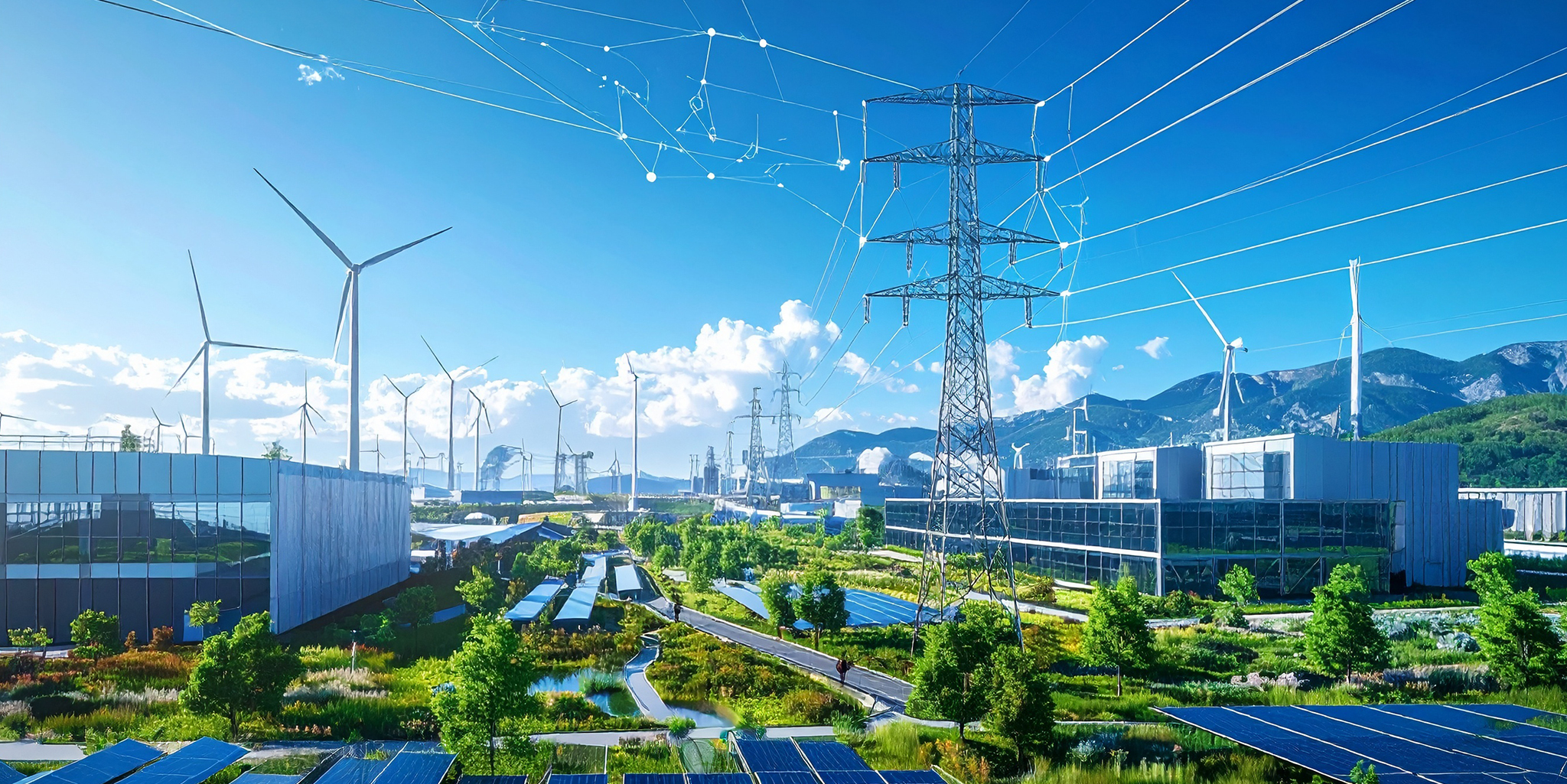
Renewable energy is rapidly replacing fossil fuel generation as countries work towards cleaner and more sustainable power systems. But generating clean electricity is only part of the transition.
The infrastructure that carries electricity from where it is generated to where it is consumed must also evolve to support these goals. As power networks expand to accommodate renewable energy integration, cross-border power exchange and urban electrification, increasing attention is being paid to the sustainability of grid infrastructure itself.
Gas-insulated switchgear (GIS) is a critical part of modern substations, valued for its compact footprint, reliability and suitability for space-constrained environments. Traditionally, GIS has relied on sulphur hexafluoride (SF₆) for insulation and arc quenching. While highly effective from a technical perspective, SF₆ is also associated with a significant environmental footprint.
As a result, SF₆-free, or “clean”, switchgear is emerging as an important step towards building grid infrastructure that supports both reliable power delivery and long-term sustainability.
The environmental challenge hidden within modern substations
High-voltage (HV) and extra-high-voltage (EHV) substations form the backbone of modern power systems. They enable renewable energy integration, cross-border power exchange and urban electrification while ensuring the reliable movement of electricity across the network.
GIS has long been a preferred solution for these applications because of its compact design and operational reliability. However, the environmental impact of SF₆ has brought increasing focus to the sustainability of this technology.
SF₆ is recognised as the most potent fluorinated greenhouse gas, with a global warming potential approximately 23,500 times that of CO₂ over a 100-year period and an atmospheric lifetime exceeding 3,000 years.
Although GIS installations typically exhibit very low operational leakage rates, emissions can occur during manufacturing, installation, maintenance, refilling and end-of-life handling. In HV and EHV applications, the quantity of SF₆ used per bay is substantial, meaning even small losses can translate into a significant climate impact.
As power networks continue to expand, the cumulative emissions associated with SF₆-based infrastructure are attracting increasing attention. This has accelerated the search for technologies that can maintain the performance benefits of GIS while significantly reducing environmental impact.
Why the transition to clean switchgear is gathering momentum
For decades, SF₆ remained the preferred insulating medium for GIS because of its exceptional dielectric and arc-quenching properties. Today, environmental considerations and evolving regulations are accelerating the development and adoption of alternative technologies.
The European Union’s F-gas Regulation (EU) 2024/573 introduced a phased prohibition on the use of fluorinated greenhouse gases in switchgear. From 2028, new high-voltage switchgear above 52 kV and up to 145 kV must be SF₆-free. This will be followed by extra-high-voltage switchgear up to 400 kV from 2032, with limited and clearly defined exemptions.
Beyond Europe, similar momentum is emerging in countries such as the United Kingdom, Japan, Australia and several Middle Eastern nations, where restrictions or reporting requirements related to SF₆ emissions are being evaluated.
In India, while no immediate ban exists, policy discussions aligned with the country’s Net Zero 2070 commitment are encouraging pilot deployments of SF₆-free high-voltage equipment.
Together, these developments signal a clear shift towards cleaner technologies for future grid infrastructure projects, particularly those supporting renewable energy integration.
Finding an alternative without compromising performance
Replacing SF₆ is technically demanding. Any alternative must provide high dielectric strength, reliable arc quenching, thermal stability, low global warming potential and safe operation over decades of service.
Several SF₆-free technologies have now matured sufficiently for commercial deployment like:
- Fluoroketone (C5-FK)-Based Gas Mixtures
Fluoroketone-based solutions offer extremely low global warming potential and negligible environmental impact. Because of their higher boiling point, fluoroketones are blended with buffer gases such as CO₂ and small amounts of oxygen.These mixtures provide acceptable insulation performance at elevated pressures and are suitable for HV and selected EHV applications. Their primary limitation is a higher minimum operating temperature, which can restrict their use in colder climates. - Fluoronitrile (C4-FN)-Based Gas Mixtures
Fluoronitrile-based mixtures provide higher dielectric strength and are particularly well suited for EHV GIS applications.When combined with CO₂ and oxygen, these gases achieve insulation and switching performance close to SF₆ while reducing CO₂-equivalent emissions by approximately 99%. Commercial installations up to 550 kV demonstrate their suitability for modern transmission networks. - Clean Air and Vacuum Interruption
Clean air, typically a mixture of nitrogen and oxygen, offers a zero-GWP solution when combined with vacuum circuit breakers.This approach is widely adopted for medium-voltage applications and has also been implemented in EHV GIS systems. While clean-air systems generally require larger dimensions at higher voltages, they provide a robust and environmentally neutral alternative for many applications.
Understanding the technologies shaping the future of GIS
While all SF₆-free technologies share the goal of reducing environmental impact, they differ in terms of performance characteristics, operating conditions and commercial maturity. The table below compares the key attributes of SF₆ and the leading alternative technologies.
From emerging technology to commercial reality
Clean switchgear is no longer limited to demonstration projects.
Leading manufacturers across the world have introduced SF₆-free GIS portfolios covering voltage levels from 72.5 kV to 550 kV. These solutions are increasingly being deployed in renewable energy hubs, offshore wind connections, urban substations and environmentally sensitive areas.
The growing number of commercial installations reflects increasing confidence in the reliability and performance of SF₆-free technologies for transmission and distribution applications.
The role of digital monitoring in clean switchgear systems
Condition monitoring plays a critical role in ensuring the long-term performance of clean switchgear.
Many of the core monitoring functions, including temperature monitoring, partial discharge (PD) detection and contact wear assessment, remain similar to those used in conventional GIS. However, SF₆-free alternatives introduce additional monitoring requirements because alternative gases do not recombine after arcing in the same way as SF₆.
Monitoring gas quality, moisture levels and decomposition products therefore becomes increasingly important. In many cases, PD detection also benefits from the combined use of ultra-high-frequency (UHF) and acoustic sensors.
Modern clean switchgear is increasingly equipped with remote monitoring platforms, real-time analytics and predictive maintenance tools. These capabilities support condition-based maintenance, reduce unplanned outages and improve life-cycle asset management.
What still stands between innovation and widespread adoption
Despite significant progress, several challenges remain.
Dedicated international standards for SF₆-free GIS continue to evolve, and many utilities still rely on existing IEC standards originally developed for SF₆-based equipment. Higher initial costs, limited long-term operational data and conservative procurement practices can slow adoption.
Supply chain readiness, availability of alternative gases and the need for trained personnel are additional considerations. Furthermore, SF₆-free technologies cannot be retrofitted into existing SF₆ installations, making brownfield projects more complex.
Addressing these challenges will require continued collaboration between utilities, technology providers, EPC organisations and policymakers.
Building a cleaner grid for the future
The transition to clean energy requires more than renewable power generation. It also requires the infrastructure supporting that transition to align with the same sustainability objectives.
SF₆-free gas-insulated switchgear represents an important step in that direction. Advances in alternative gas technologies and digital monitoring have made clean switchgear a technically viable and environmentally responsible solution for HV and EHV applications.
As power networks continue to expand, SF₆-free technologies can help ensure that the infrastructure supporting renewable integration, electrification and future grid growth remains reliable, compact and environmentally responsible.
As the grid evolves to meet the demands of a low-carbon future, clean switchgear is emerging as an important technology that combines performance, reliability and sustainability in equal measures.


