
Sectors
Infrastructure
Services
Design & Engineering, Project Management and Safety
Mumbai is a city that never sleeps. It is the financial capital of India and one of the largest megacities in the world. More than 11 million people live and work here, and the city continues to grow every year. Behind its glittering skyline and bustling streets lies a basic need that sustains life and drives progress: water.
By the early 1970s, Mumbai faced a serious challenge. The existing water supply system was stretched to its limits. The city relied on lakes such as Vaitarna, Tansa, Upper Vaitarna, Vehar, Tulsi and Powai, located between 100 km and 160 km away. Water from these sources flowed to the city through gravity-fed systems. In addition, water was pumped from the Bhatsai River, 65 km from Mumbai.
The total supply was about 2,900 million litres per day (MLD). This was not enough for a city that was expanding rapidly. The Brihanmumbai Municipal Corporation (BMC) recognised that a bold and visionary solution was needed. Thus began the Mumbai Water Supply Project, one of the largest urban water supply projects in Asia. It has been central to meeting the city’s daily water needs for decades and stands as a testament to engineering excellence.
The Vision Behind the Project
The project was conceived as part of a master plan for integrated development of water supply and sewerage facilities. The aim was to create a system that could meet the growing demand for water in Mumbai and ensure reliability for decades to come. The plan involved drawing water from the Bhatsai River and delivering it through a modern and efficient network.
The project was designed to be implemented in three stages. Each stage would add 455 MLD of capacity. This phased approach allowed the city to meet immediate needs while planning for future growth.
Our company was entrusted with a critical role in this transformation. We partnered with a reputed international firm to provide system design and detailed engineering for intake pumping stations, treatment plants, tunnels and reservoirs. We also introduced value engineering principles to optimise cost, improve efficiency and ensure sustainability.
The Journey of Implementation
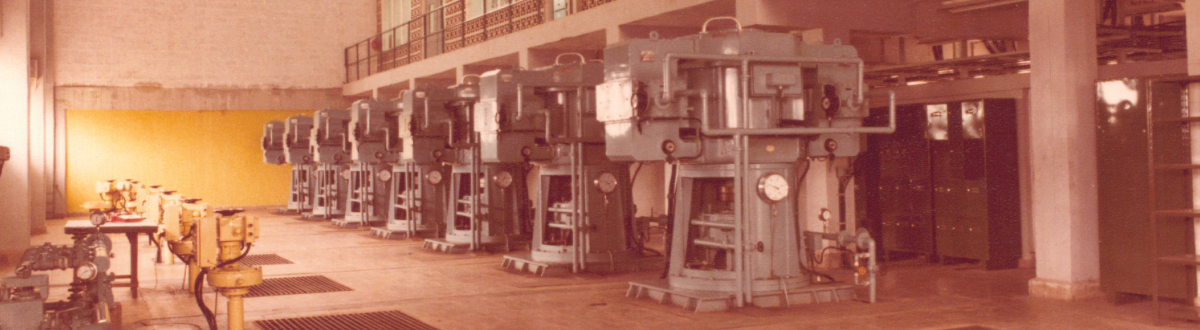
Stage One: The Foundation Stage One was commissioned in 1979. It marked the beginning of a new era in Mumbai’s water supply. Engineers constructed the intake at Pise and installed 5 working pumps and 2 standby pumps, each with a capacity of 90 MLD. The total head was 38.4 metres of water column. Conveyance was through mild steel mains of 2,210 mm diameter. A treatment plant with clarifiers and filters for 455 MLD was built.
Stage Two: Scaling Up Stage Two was commissioned in 1987. It added 4 working pumps and 3 standby pumps, each with a capacity of 113.6 MLD. The total head was 37.6 metres. The conveyance system remained 2,210 mm in diameter but tunnels were introduced, 3 metres in diameter and 4 km long.
Stage Three: Engineering Excellence Stage Three was completed in 1997. It involved raising the Pise Weir height by 2 metres, installing 4 working pumps and 3 standby pumps of 113.6 MLD capacity and constructing tunnels up to 5 km long. Conveyance mains were upgraded to 3,000 mm diameter.
Expansion and Modernisation
The Government of Maharashtra approved an additional allocation of 455 MLD from the Bhatsai River. Key works included civil works for pumping stations at Pise and Panjrapur, installation of 7 vertical turbine pumps at Pise and 6 at Panjrapur along with 2 horizontal split casing pumps, extension of switchyards and electrical systems, and a new treatment plant at Panjrapur with clarifiers, filters, alum and chlorination facilities.
Rising mains of 3,000 mm diameter and 9.5 km in length were laid from Pise to Panjrapur. Conveyance mains of 3,000 mm diameter and 10 km in length were built from MGL EEH to Bhandup and further to Powai. Underground tunnels were constructed including a 5.8 km tunnel from Bhandup to Malad Hill Reservoir and a 6.38 km tunnel from Malad Hill Reservoir to Liberty Garden and Charkop. Additional tunnels connected Bhandup Hill Reservoir to LBS Marg and Tagorenagar and Veravali Reservoir to Adarshnagar and Yari Road. A new service reservoir of 45 million litres capacity was built at Malad Hill.
TCE Scope of Work
Our company played a central role in the success of the Mumbai Water Supply Project. The scope of work included system design and detailed engineering for intake pumping stations and treatment plants across all three stages of the project. We designed and engineered conveyance systems including large diameter mild steel transmission mains and underground tunnels. We developed master balancing reservoirs and associated civil structures. We implemented instrumentation and telemetry systems for real-time monitoring and operational control. We prepared tender packages and feasibility reports for major components such as Pise and Panjrapur pumping stations, rising mains and treatment plants. We supported construction planning and phased implementation to ensure timely delivery and cost efficiency.
Value Engineering Contributions
Our company applied value engineering at every stage. We optimised pumping systems to reduce energy consumption and operational costs by selecting the most efficient pump configurations. We introduced innovative tunnel design using rock tunnelling techniques to avoid costly bridge crossings and minimise environmental impact. We selected mild steel for transmission mains to balance durability and cost-effectiveness. We designed compact treatment layouts that combined clarifiers and filters in a space-saving arrangement to reduce land use and construction time. These measures resulted in significant cost savings and improved reliability without compromising quality.
Impact and Significance
Today Mumbai receives 2,900 MLD of water every day. This project has transformed the city’s water supply system, supported its growth as a global metropolis and improved the quality of life for millions. It stands as one of the largest urban water supply systems in Asia and a benchmark for infrastructure development.
The Mumbai Water Supply Project is not just an engineering achievement. It is a story of vision, determination and innovation. It shows how collaboration and value engineering can deliver world-class solutions for megacities.
The project demonstrates that large cities need long-term planning and phased implementation. It proves that collaboration between local and global experts creates world-class solutions. It also highlights the importance of sustainable design and continuous monitoring. Future plans include further augmentation and modernisation to meet the growing demand and ensure resilience against climate challenges.
The Mumbai Water Supply Project is more than pipes and pumps. It is a lifeline for a city that never sleeps. It is a legacy of engineering excellence and a promise of a better tomorrow.


About Us
Overview Our Leadership MilestonesSubsidiaries
- Ecofirst - Tata Consulting Engineers USA, LLC Corporate Social Responsibility Corporate GovernanceMedia
Media Kit Notices Annual Reports Marketing Collateral Videos TCExpressions Press Releases Press Coverage@tceconnect


© Tata Consulting Engineers Limited. All Rights Reserved | Site Credits:DV



