


Better Engineering Starts with Better Collaboration

Modern engineering projects operate in an environment where organisations are expected to remain lean, efficient and schedule-driven while coordinating an increasingly interconnected network of clients, engineering contractors, vendors, inspection agencies and site teams. Technical capability remains fundamental, but successful project execution depends equally on how effectively these stakeholders exchange information, resolve interfaces and make decisions throughout the project lifecycle.
Many project challenges that appear during procurement, manufacturing or construction can trace their origins to decisions, information gaps or unresolved interfaces much earlier in the engineering process. An incomplete specification can generate repeated vendor queries. A delayed technical decision can affect procurement and manufacturing. An outdated document revision can create comments that have already been resolved. For complex engineering projects, collaboration therefore needs to be treated as part of the execution strategy rather than simply a communication requirement.
Collaboration Needs to Extend Across the Entire Project Lifecycle
Engineering collaboration begins well before detailed design and continues through feasibility, concept development, system definition, manufacturing, construction, commissioning, start-up and final takeover. Decisions made at each stage influence what follows, making continuity of information and alignment between stakeholders essential.
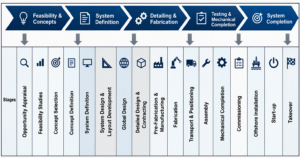
Figure 1. Engineering project lifecycle from feasibility and concept development to start-up and takeover
During opportunity appraisal and feasibility, strategic relevance, technical and commercial viability, environmental considerations and project risks establish whether an opportunity should progress. Concept selection then compares alternative engineering and technology approaches using considerations such as lifecycle cost, operability, maintainability and safety. Once the selected concept moves into definition and detailed engineering, equipment requirements, process configurations, specifications, datasheets, P&IDs, layouts, requisitions and bid evaluations begin converting that concept into an executable project.
The importance of collaboration increases rather than decreases as design becomes more detailed. Interfaces between process, mechanical, piping, electrical, instrumentation and civil disciplines have to be coordinated before they become problems during fabrication or construction. Once vendors begin manufacturing, compliance with specifications, quality requirements and delivery schedules becomes important, while installation and commissioning require engineering, construction, vendors and client teams to work from a common understanding of design intent and performance requirements.
Where Engineering Projects Begin to Lose Time
Three recurring challenges deserve particular attention: documentation delays, communication gaps and incomplete technical information.
Document reviews, approvals and revisions can consume substantial engineering effort. When comments or approvals arrive late, the impact is rarely confined to the document itself because procurement, manufacturing and construction activities may depend on that information. Fragmented or unclear comments can create further revision cycles and additional engineering work.
Communication gaps create a similar chain reaction. Different interpretations of requirements can lead to repeated discussions, duplicate comments and engineering rework, while information that is not shared promptly can hold up decisions required elsewhere in the project. Incomplete specifications, missing design data and unclear project requirements compound the problem by forcing engineering and procurement teams to seek clarifications before equipment selection or document approval can progress.
These issues demonstrate an important principle: engineering efficiency is influenced not only by how quickly individual tasks are completed, but by the quality and timing of the information moving between those tasks.
Getting the Project Definition Right Early
One of the strongest opportunities to improve execution lies before orders are placed.
Technical specifications need to be clear, complete and specific to the project, with scope definitions, submission requirements and applicable vendor requirements communicated to relevant stakeholders. Well-defined inputs allow engineering contractors and vendors to develop more accurate proposals while reducing clarification cycles during bidding.
Specifications should also reflect actual operational needs while maintaining the required safety and reliability standards. Excessive conservatism or over-specification can increase project cost and procurement lead time, while incorporating lessons from previous projects can improve specification quality and provide greater flexibility during execution.
Timely decision-making is equally important. Decisions concerning technical requirements, vendor approvals and project priorities can have cascading consequences when delayed because engineering and procurement activities often depend on them. Addressing key technical issues early can reduce the need for schedule recovery later in execution.
Better Reviews Reduce Rework
Once engineering and procurement are underway, the quality of the review process becomes critical.
Comments need to be clear, technically justified and consolidated across disciplines wherever possible. Multiple rounds of fragmented comments increase engineering effort and can leave vendors and contractors responding to different concerns at different times. Consolidated reviews allow related issues to be understood together and can improve document turnaround.
Revision control is equally fundamental. Comments need to be made against the latest document version. Reviewing superseded revisions can regenerate issues that have already been resolved, creating duplicate comments and unnecessary rework. Reliable document tracking and revision management therefore form part of engineering quality, not simply administrative control.
Information arising from technical meetings, inspections and reviews also needs to reach every project team affected by the decision. A decision successfully resolved in one conversation creates little value if another discipline continues working with outdated information.
Detailed Engineering Is Ultimately an Interface Management Exercise
As projects move into detailed engineering, coordination across disciplines becomes increasingly important. Process, mechanical, piping, electrical, instrumentation and civil engineering cannot work as isolated streams because many engineering decisions affect more than one discipline. Early identification of these interfaces helps resolve conflicts before they begin affecting procurement, construction or the project schedule.
The quality of procurement information matters as well. RFQ packages should provide the technical requirements, datasheets, drawings and submission expectations vendors need to understand the requirement accurately. Vendor queries then need technically clear and timely responses, while bid evaluations need to consider compliance alongside reliability, maintainability and lifecycle costs.
After an order is placed, ownership becomes particularly important. Engineers need to actively manage assigned documents and close review comments within the required timeframe because unresolved documents can affect activities beyond engineering itself. Joint reviews involving clients, engineering contractors and vendors can help resolve complex technical issues directly rather than extending discussions through prolonged correspondence.
Vendors Need to Be Part of the Engineering Conversation
Effective collaboration also depends on the quality and timeliness of vendor inputs.
Before an order, complete technical proposals and supporting documentation make evaluation more effective and reduce clarification cycles. Experience from previous projects can also help identify risks and propose more practical solutions, while Bid Clarification Meetings provide an opportunity to align technical expectations, explain deviations and discuss design approaches before contract award.
Following an order, early preparation for the kick-off meeting can establish important interfaces, schedules and information requirements before detailed execution accelerates. Vendors then need to maintain agreed document schedules and provide accurate, complete submissions that have undergone appropriate internal quality checks.
Comment resolution also needs structure. A transparent register that captures review comments and closure status can reduce duplication, maintain traceability and make outstanding issues visible to the teams responsible for resolving them.
Turning Project Experience into Better Execution
Individual practices become considerably more powerful when they are embedded into the way projects are executed.
Early stakeholder involvement can reveal risks, interfaces and constraints before they become larger execution issues. Standardised templates, checklists and document formats can improve consistency and reduce missing information. Digital document-management and collaboration platforms can provide more immediate access to project information and support tracking and approval workflows across geographically distributed teams.
Continuous improvement closes the loop. Capturing lessons from completed projects and sharing them across teams allows successful practices to be repeated and recurring problems to be addressed in subsequent projects rather than rediscovered.

Figure 2. Alignment between client, detailed engineering contractor and vendor
Small Gaps Can Create Larger Downstream Effects
Project experience demonstrates how seemingly limited coordination issues can extend beyond the activity where they originate.
Delayed finalisation of a supplier or sub-vendor can create uncertainty in procurement planning and manufacturing. Resolving the issue then requires additional coordination among project stakeholders, while dependent engineering activities may also be affected. Earlier alignment of the technical requirement and approval process can reduce this risk.
Document control provides another example. When teams review an outdated revision rather than the current document, comments can be duplicated and engineering effort diverted towards reconciling differences between versions. Similarly, when previously raised technical requirements are not systematically tracked through subsequent revisions, the same issue can reappear across multiple review cycles.
The larger lesson is that project efficiency can be lost incrementally. A clarification here, a duplicated review there or an unresolved interface may appear manageable individually, but their effects accumulate across engineering, procurement, manufacturing and construction.
Collaboration as an Engineering Discipline
Successful project engineering requires more than strong individual disciplines. It depends on the ability of clients, engineering contractors, vendors, inspection teams and site teams to make decisions, manage interfaces and exchange reliable information throughout the project lifecycle.
Clear technical requirements at the outset reduce ambiguity. Timely decisions prevent unresolved issues from moving downstream. Consolidated reviews and disciplined revision control reduce avoidable engineering cycles, while early multidisciplinary coordination helps identify interfaces before they become execution problems. Structured comment management and lessons learned help ensure that knowledge generated on one project is not lost before the next begins.
Ultimately, collaboration should not be viewed as a supporting activity around engineering.
On complex projects, collaboration is part of the engineering process itself. When information, decisions and responsibilities move through the project with the same discipline applied to technical design, teams are better positioned to protect quality, cost and schedule from concept through commissioning.


