


The Role of 5G in Industrial Automation

Industrial facilities today generate vast volumes of data from connected equipment, sensors, control systems and digital applications. Turning this data into actionable intelligence requires communication networks that are faster, more reliable and capable of supporting millions of connected devices simultaneously.
This is where 5G enters the picture. While often associated with consumer connectivity, 5G is rapidly emerging as a foundational technology for industrial automation. Combined with intelligent automation, edge computing, digital twins and advanced analytics, it has the potential to transform how industries design, operate and optimise assets throughout their lifecycle.
The evolution of communication technologies has steadily expanded the possibilities of industrial connectivity:
- 1G introduced analogue mobile phones with voice services.
- 2G enabled digital communication and SMS messaging.
- 3G improved data transmission speeds and internet access.
- 4G significantly enhanced speed and data capabilities, revolutionising mobile connectivity.
- 5G represents the next leap, delivering high-speed communication, ultra-low latency and unprecedented device connectivity.
Alongside this evolution, Industry 5.0 is creating closer integration between industry, society and sustainability. Technologies such as the Internet of Things (IoT), machine learning, deep learning, cloud computing, augmented reality, virtual reality, collaborative robots (cobots), robotic process automation, digital twins, artificial intelligence, hyperautomation, cybersecurity solutions and predictive analytics are becoming integral to industrial ecosystems. Combined with 5G communications, smart sensors and edge devices, these technologies offer significant opportunities for advancing industrial automation.
What Makes 5G Different?
Several characteristics distinguish 5G from previous communication technologies:
- 5G networking standards: 5G networks are divided into Non-Standalone (NSA) and Standalone (SA) architectures. NSA networks continue to utilise 4G infrastructure for network management while transmitting application data over 5G. SA networks use 5G for both functions.
- Expanded spectrum availability: A wider spectrum enables greater capacity and communication performance.
- Advanced network innovations: New technologies significantly increase the available spectrum for transmitting and receiving data compared with existing 4G LTE networks.
Why 5G Matters for Industrial Automation
Industrial organisations are increasingly adopting intelligent automation to:
- Improve customer satisfaction and profitability
- Increase operational capacity
- Remain competitive in changing markets
- Improve productivity and efficiency
- Enhance safety, security and risk management
Despite these benefits, many industrial facilities continue to face challenges related to reliable connectivity, large-scale device integration, asset tracking, remote operations and the deployment of advanced technologies such as artificial intelligence, virtual reality and augmented reality.
The real value of 5G lies not simply in faster communication, but in its ability to connect previously isolated industrial ecosystems. Together, intelligent automation and 5G can improve operational efficiency, accelerate decision-making, reduce time-to-market and strengthen overall system resilience.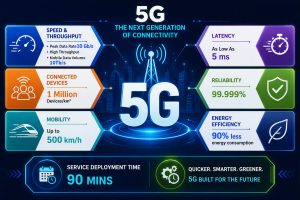
Figure 1: 5G Communication Network Capabilities
Key benefits of 5G include:
- 10 to 20 times higher speed than 4G, often referred to as Enhanced Mobile Broadband (eMBB)
- Ultra-Reliable Low-Latency Communication (URLLC) with latency below 5 milliseconds
- Connectivity for up to one million devices per square kilometre through Multi-Input Multi-Output (MIMO) architecture
- Data bandwidth of 1 Gbps or higher
- Download speeds approaching 2.5 Gbps
The Building Blocks of Intelligent Automation
Several technologies are shaping the next generation of industrial automation:
- Low-code and no-code platforms
- Artificial intelligence and machine learning applications
- Collaborative robots (cobots)
- Natural language processing and conversational AI
- Process prioritisation and optimisation
- Closed digital feedback loops
- Enterprise-wide visibility through the convergence of Information Technology (IT), Operational Technology (OT) and Engineering Technology (ET)
- Enhanced operational resilience that minimises unplanned downtime
Where 5G Is Transforming Industrial Operations
The convergence of intelligent automation, 5G communication and smart sensor technologies is enabling organisations to rethink how industrial assets are monitored, managed and optimised in real time.
- Augmented and Virtual Reality
Operator training simulators can leverage cloud-hosted software delivered as Software as a Service (SaaS), creating immersive training environments while reducing infrastructure requirements and improving learning outcomes. - Connected Operations and Remote Expertise
Solutions inspired by connected mobility platforms can support remote monitoring and expert guidance across industrial facilities. Engineers and subject matter experts can provide maintenance recommendations and operational support from remote locations, reducing downtime and improving plant performance. - Smart Manufacturing
Industrial applications include real-time condition monitoring, wireless robotic operations, cloud-based PLC systems and intelligent supply chain management, enabling greater flexibility and responsiveness across manufacturing environments. - Connected Energy Systems
Renewable energy assets, including wind, solar and hydro facilities, can integrate automation systems with power grids through 5G-enabled communications, reducing dependence on conventional fibre-optic networks. - Connected Drones
Drones equipped with advanced sensing and communication capabilities can support infrastructure inspections, security operations, laser scanning, digital modelling and plant modernisation initiatives, particularly in difficult-to-access locations. - Digital Engagement Platforms
Modern communication networks can also support branding, innovation showcases, service promotion and knowledge sharing through digital platforms and social media channels. - AI-Powered Personal Assistants
Cloud-connected AI systems can support both personal and industrial applications. Digital helmets equipped with cameras and AI capabilities can assist visually impaired users and support maintenance teams through guided operational workflows. - Smart Cities
Applications include public Wi-Fi, intelligent surveillance systems, air quality monitoring, smart metering, smart grids, street lighting, water management systems, citizen engagement platforms, digital healthcare and education services. Continuous monitoring and intelligent analytics can improve efficiency, security and sustainability outcomes across urban environments.
The Road Ahead
As industries move towards autonomous operations, digital twins and real-time decision-making, connectivity is becoming as critical as power and process infrastructure.
Many industrial facilities continue to rely on extensive wired infrastructure for monitoring, control and robotic operations. While effective, these systems require significant cabling, ongoing maintenance and complex reconfiguration whenever operational requirements change. This creates a compelling opportunity for 5G-enabled wireless communication networks.
At the same time, intelligent automation tools powered by advanced analytics can identify operational trends and equipment performance patterns, supporting predictive maintenance and improved asset reliability. Combined with edge computing, 5G can process information closer to the source, reducing latency and improving system responsiveness. Secure remote-maintenance capabilities further enable informed decision-making and operational optimisation.
Key Takeaways
- 5G enables industrial automation at scale through high-speed communication, low latency and extensive device connectivity.
- Intelligent automation and 5G together can enhance operational efficiency, improve decision-making and strengthen resilience.
- Edge-enabled ecosystems support faster processing, efficient data flow and improved process optimisation.
- As Industry 5.0 accelerates digital transformation, 5G is positioned to become a critical enabler of connected, intelligent and future-ready industrial operations.
- Over time, 5G networks have the potential to replace wired communication systems in some of the most demanding industrial applications, including asset tracking, motion control and high-throughput vision systems.


