


Are Power Grids Ready for the Data Centre Boom?
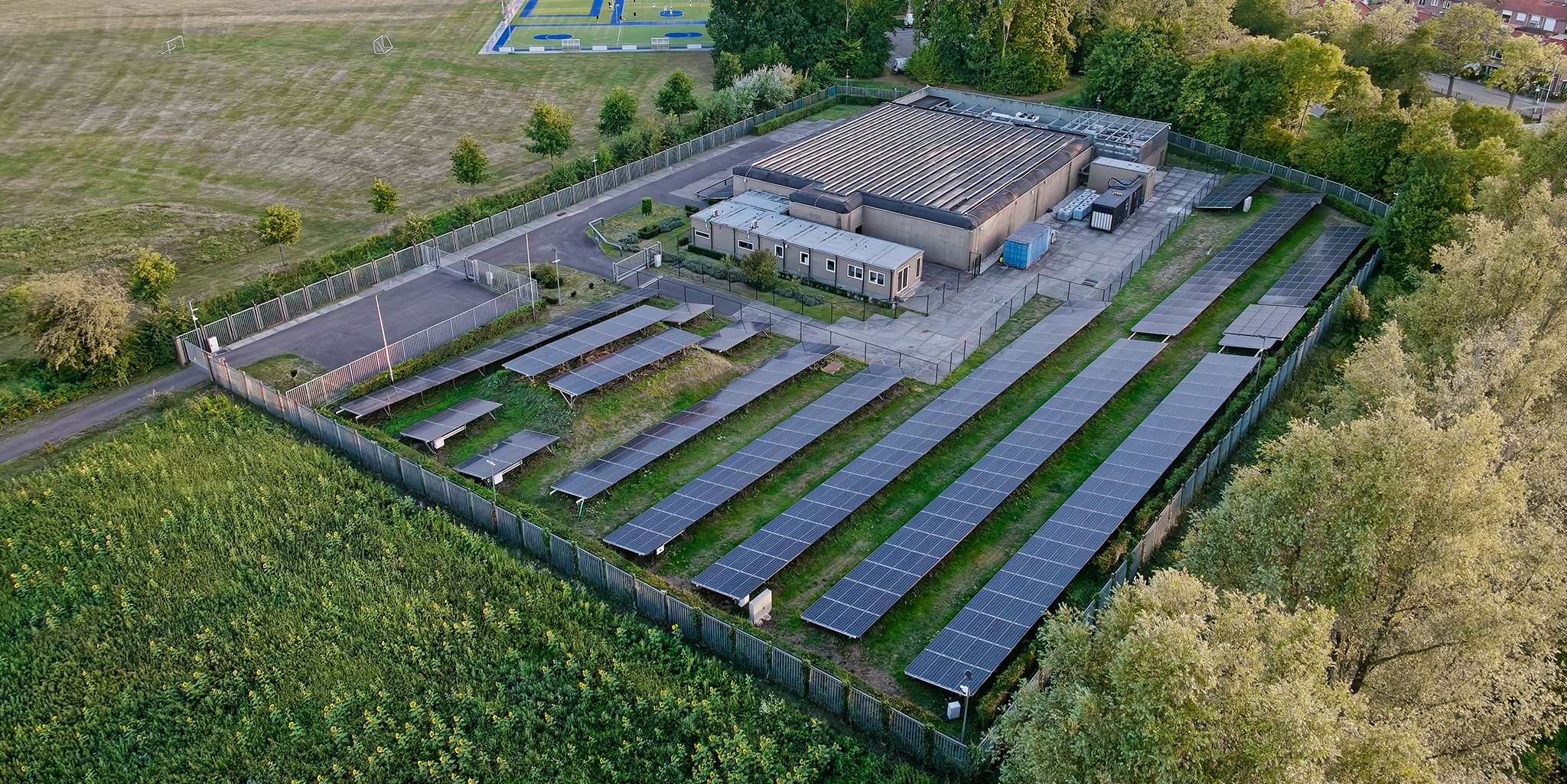
The global digital economy is expanding at an unprecedented pace. Cloud computing, artificial intelligence, streaming platforms, connected devices and enterprise digital transformation are now integral to everyday life. At the core of this transformation are data centres, the physical backbone of a world that increasingly lives, works and transacts online.
Behind these seamless digital experiences, however, lies a far less visible reality: electricity. Data centres are among the most power-intensive facilities ever built. As their scale, density and computing intensity grow, a fundamental question is confronting governments, utilities and infrastructure planners. Are existing power grids equipped to support the accelerating data centre boom?
This article explores how rapidly rising data centre demand is reshaping electricity systems, why grids are under strain, and what technical, operational and policy responses are required to ensure that digital growth does not outpace energy readiness.
Data Centres and the New Era of Electricity Demand
From server rooms to city-scale power consumers
Data centres have evolved rapidly over the past decade. Earlier facilities operated at relatively modest power densities, often consuming single-digit kilowatts per rack. The rise of artificial intelligence, machine learning and GPU-intensive computing has fundamentally altered this profile.
Today, advanced AI clusters routinely require 30 to over 100 kW per rack. Experimental and next-generation designs are already exploring 200 kW racks and even megawatt-class configurations. Industry leaders are evaluating architectures capable of supporting up to 1 MW per rack, enabled by high-voltage direct current systems operating at 800 V and beyond.
As a result, data centres have shifted from being large electricity consumers to grid-scale loads. A single hyperscale facility can demand between 100 and 300 MW of continuous power, comparable to the electricity consumption of a medium-sized city. Unlike many industrial users, this demand is constant, intensive and largely inflexible.
The Global Electricity Footprint of Data Centres
Rapid growth across regions
Data centre electricity consumption is rising across all major economies. In the United States, data centres account for approximately 4.4 percent of national electricity consumption. In the European Union, the figure is around 3 percent, while Ireland stands out globally, with data centres consuming roughly 22 percent of total national electricity demand.
The Asia-Pacific region is witnessing the fastest expansion. India, in particular, is emerging as a major data centre hub. National data centre capacity is expected to increase from around 1,263 MW today to more than 4,500 MW by 2030, representing close to 3 percent of India’s total electricity demand and concentrated in specific urban and industrial clusters.
Globally, data centres consumed an estimated 415 terawatt-hours (TWh) of electricity in 2024, about 1.5 percent of total global demand. While this share appears modest, its impact on power systems is significant due to geographic concentration and the speed of development. Global data centre electricity consumption is projected to more than double by 2030, reaching approximately 945 to 980 TWh.
For utilities, this growth presents a major planning challenge. Data centres could dominate future electricity demand growth, driving costly investments in generation, transmission and distribution infrastructure. Without careful planning, these costs may ultimately be passed on to other consumers.
Why Existing Power Grids Are Under Strain
Concentration, scale and unpredictability
Most power grids were not designed to accommodate extremely large, concentrated loads appearing over short timeframes. Residential demand is typically distributed and predictable, while industrial loads often follow defined operating schedules.
Data centres behave very differently. Their electricity consumption is driven by algorithms rather than human activity. AI training workloads can run continuously for days or weeks, drawing steady, high-intensity power from dense GPU clusters. In some cases, demand can surge suddenly when large computational tasks are initiated, irrespective of the time of day or overall grid conditions.
This creates challenges for grid operators. Voltage stability, frequency regulation and transmission congestion become harder to manage when large, inflexible loads are connected at a single point. In regions where multiple hyperscale data centres cluster together, local grid infrastructure can become a bottleneck long before national generation capacity is exhausted.
Comparing Data Centres with Other Power Users
Putting demand into perspective
The scale of data centre demand becomes clearer when compared with familiar electricity consumers. A typical household consumes around 1 to 2 kW of power. Fast-charging stations for electric vehicles draw between 50 and 150 kW. Even energy-intensive manufacturing plants generally operate in the range of 5 to 20 MW.
In contrast, a single hyperscale data centre can require 100 to 300 MW of continuous power. This unprecedented level of demand places significant pressure on substations, transmission corridors and generation reserves. When several facilities are developed in close proximity, the cumulative impact can overwhelm existing grid assets.
Key Challenges in Integrating Large-Scale Data Centres
Technical, operational and planning constraints
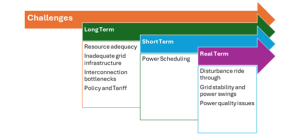
Integrating large-scale data centres into power grids presents challenges across multiple time horizons.
Over the long term, resource adequacy and infrastructure readiness are critical concerns. Data centres can be planned and constructed far more quickly than new power plants or high-voltage transmission lines. This mismatch can result in supply constraints and lengthy interconnection queues, delaying projects or increasing reliance on interim solutions.
In the short and real-time operational context, the high concentration of power electronics within data centres introduces power quality and stability risks. Harmonic distortion, voltage fluctuations and reduced system inertia can affect both local grids and neighbouring consumers. During grid disturbances, ensuring that data centres can ride through faults without disconnecting is essential to maintaining system stability.
Challenges Across Time Horizons
Building Grid-Ready Data Centres
Integrated solutions across infrastructure, design and policy
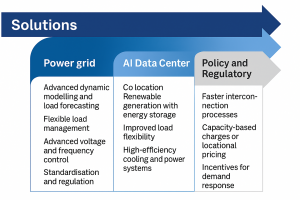
Addressing these challenges requires a coordinated approach spanning grid infrastructure, data centre design and regulatory frameworks.
On the grid side, advanced dynamic modelling and more accurate load forecasting are essential. Utilities must plan for large, concentrated loads well in advance, supported by flexible load management strategies and enhanced voltage and frequency control. Standardisation and clear regulatory frameworks can help align expectations between utilities and data centre developers.
Within data centres, design choices are equally important. Co-locating renewable energy generation with energy storage can reduce grid dependence and improve resilience. Greater load flexibility, such as modulating non-critical workloads during grid stress, can allow data centres to actively support grid stability. High-efficiency cooling systems and advanced power architectures further reduce overall demand.
Policy and regulatory measures play a critical role. Faster and more transparent interconnection processes can reduce delays and uncertainty. Capacity-based charges or locational pricing can guide development towards areas with available grid capacity. Incentives for participation in demand response programmes, including AI-enabled demand management, can better align data centre operations with grid conditions.
Integrated Solutions Framework
Preparing for a Digitally Powered Future
Planning today for tomorrow’s demand
Power grids worldwide are increasingly strained by the rapid expansion of data centres. The gap between the pace of digital infrastructure development and the speed of grid expansion continues to widen. While investments in renewable energy, smart grids and advanced control systems offer promise, significant challenges remain in transmission capacity, grid flexibility and long-term planning.
The real test lies in how quickly and intelligently power systems can adapt. Coordinated planning among governments, utilities, regulators and data centre operators is no longer optional. It is essential to ensure that the growth of the digital economy does not compromise energy reliability, affordability or sustainability.
As data centres continue to shape the future of work, commerce and innovation, power grids must evolve alongside them. The success of the digital age will depend not only on computing power, but on the strength, resilience and readiness of the electricity systems that support it.


