


Hybrid Energy and the Future of Sustainable AI Data Centres
Artificial intelligence is driving an unprecedented rise in data centre energy consumption. High performance computing and advanced cooling systems are pushing electricity demand to new levels.
According to the International Energy Agency, global electricity demand from data centres could reach 1,000 terawatt hours by 2026, nearly double the 2022 level, largely due to AI and cloud computing workloads. Hyperscale AI data centres may require 80 to 150 megawatts of continuous power, making dependence on grid power alone both costly and unsustainable.
To meet growing demand while reducing environmental impact, data centre operators are increasingly turning to hybrid energy systems.
Why Grid Only Power Is No Longer Enough
Traditional data centres rely primarily on grid electricity, supported by diesel generators for backup. While this model offers reliability, it comes with high carbon emissions and exposure to fluctuating energy prices.
AI workloads often run continuously for days or weeks, leaving little room for power interruptions. This makes energy resilience just as important as energy cost. Hybrid energy systems address both challenges by combining multiple power sources into a single coordinated setup.
What a Hybrid Energy System Looks Like for AI Data Centres
A hybrid energy system integrates different power sources and manages them through a central control platform. For AI data centres, a typical configuration includes:
- Renewable energy from solar and wind
- A captive power plant
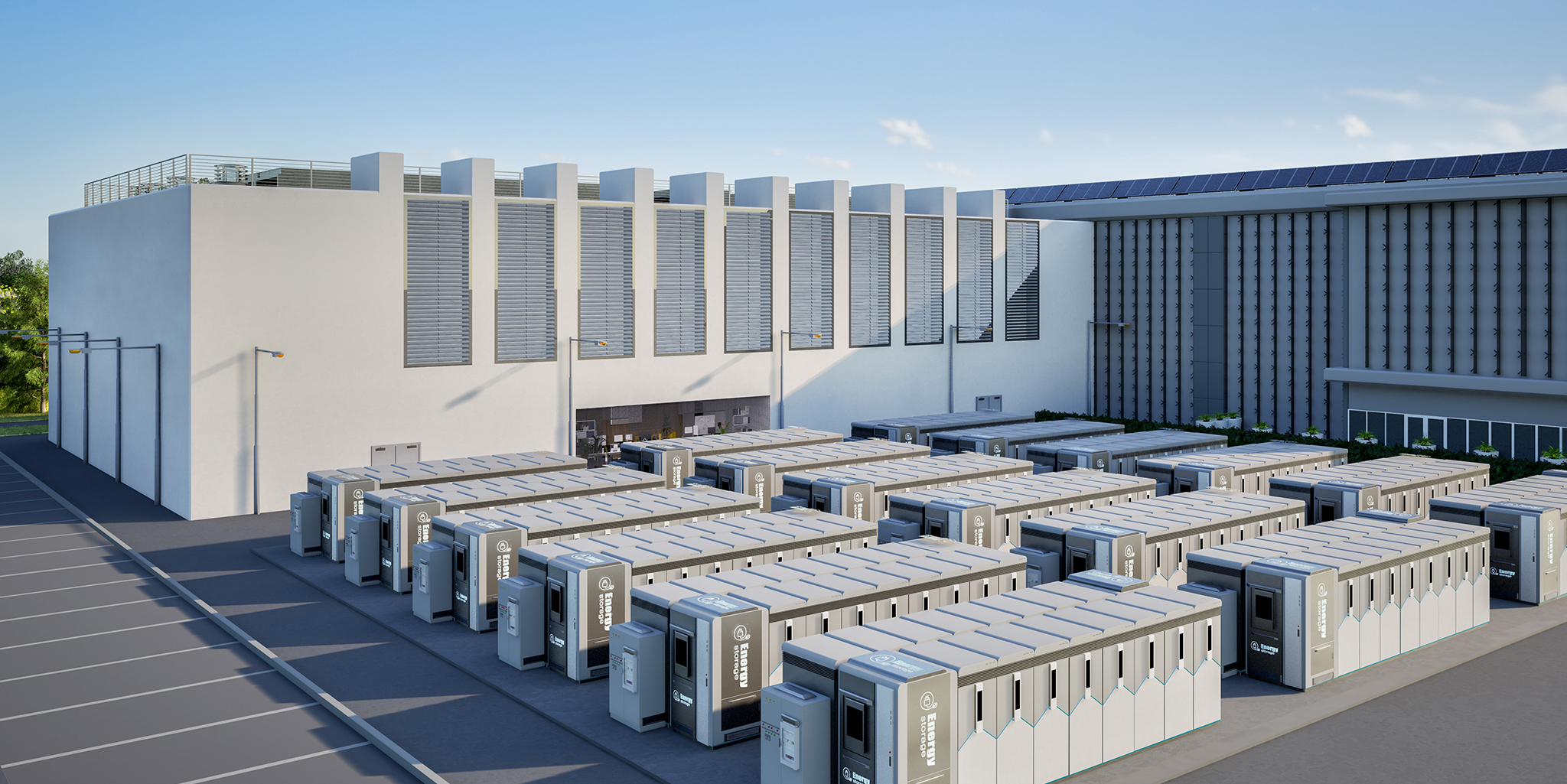
- Battery energy storage
- Grid electricity
These sources work together to balance cost, reliability and sustainability. Renewable energy is prioritised when available, captive generation and grid power support base demand, and battery storage ensures round the clock stability.
Using Renewable Energy at Scale
Renewable energy can be deployed in several ways depending on location and land availability.
- Onsite installations such as rooftop or nearby solar plants can typically meet 5-10 percent of demand in urban campuses.
- Offsite renewable sourcing through long term power purchase agreements or renewable energy certificates allows city based data centres to access clean power without owning land.
- Specialised solutions such as floating solar or nearby solar farms can be integrated into a data centre microgrid in industrial or suburban areas.
This virtual renewable approach enables urban data centres to meet sustainability goals despite space constraints.
Battery Storage as the System Stabiliser
Battery energy storage systems play a critical role in hybrid configurations by maintaining power quality and reliability.
They support:
- Peak load reduction during high demand periods
- Smoothing of variable solar and wind output
- Backup power during grid failures
Modern lithium-ion battery systems can cover 15-20 percent of total daily energy demand with two to four hours of discharge duration.
For example, integrating a 30-megawatt hour battery system into a 100-megawatt AI data centre can reduce peak grid power draw by 20-25 percent and cut carbon emissions by approximately 20,000 tonnes of carbon dioxide.
The Role of Captive Power Plants
Captive power plants in hybrid systems typically include gas-based generation, fuel cells or waste heat recovery systems. While onsite plants may not be practical in dense urban areas due to space and operational constraints, offsite captive hybrid plants combining gas, solar and battery storage are now commercially proven.
Hydrogen based fuel cells using proton exchange membrane or solid oxide technology are also being piloted as clean backup options. A one-megawatt hydrogen fuel cell can provide eight to ten hours of autonomous runtime with zero emissions and minimal noise, making it suitable for urban and modular data centres.
Improving Cooling Efficiency Through Energy Integration
Hybrid energy strategies extend beyond electricity generation to overall energy efficiency.
Waste heat from captive power plants or fuel cells can be used to drive absorption chillers, reducing cooling energy demand. Cooling typically accounts for 35-40 percent of a data centre’s total energy consumption. Reusing waste heat significantly lowers overall power requirements.
In the future, captive plants are expected to transition to hydrogen ready turbines, enabling near zero carbon hybrid energy architectures.
Hybrid Energy Versus Grid Only Power
The benefits of hybrid systems become clear when compared to grid dependent models.
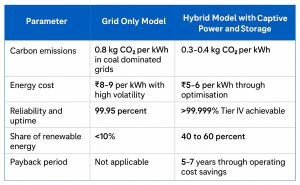
Hybrid energy systems deliver sustainability gains without compromising uptime, a critical requirement for AI training and inference workloads.
Intelligent Energy Management Through Digital Platforms
Advanced digital energy management systems continuously monitor and optimise power flows across renewables, captive generation, battery storage and grid imports.
Using predictive analytics, these systems can:
- Forecast renewable generation with greater than 95 percent accuracy
- Adjust captive power output based on renewable and battery availability
- Optimise battery charging and discharging based on tariffs
- Schedule non critical loads to align with renewable availability
These self learning systems improve energy utilisation and reduce unplanned downtime, making energy infrastructure as intelligent as the AI workloads it supports.
Building the Next Generation of AI Energy Ecosystems
Hybrid energy systems are redefining the future of data centre infrastructure by combining energy independence, cost efficiency and sustainability.
Compared to traditional grid dependent models, hybrid AI data centres can achieve:
- Up to 60 percent lower carbon emissions
- 15 to 20 percent reduction in operating costs
- Industry leading reliability and uptime
For countries like India, hybrid energy supports national priorities such as Digital India, green energy corridors and the Net Zero 2070 commitment. As AI adoption accelerates, the smartest digital systems will depend on energy solutions that are clean, resilient and hybrid by design.


