


Green Propulsion and the Energy Transition: How ammonia is shaping a practical pathway to low‑carbon power and maritime transport
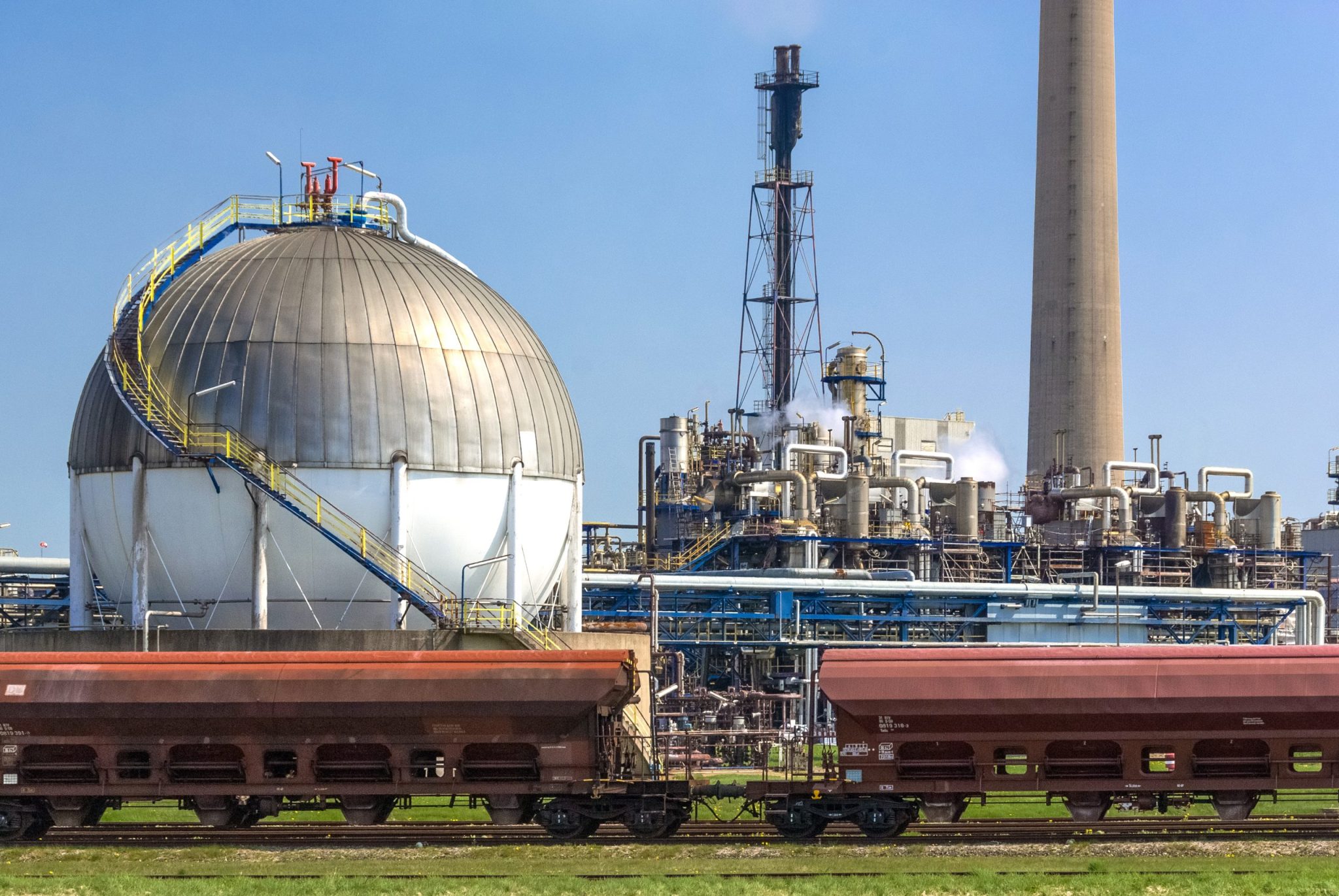
As the global economy accelerates its transition towards low‑carbon energy systems, the focus is expanding beyond renewable generation alone. The challenge today is not just producing clean energy, but storing it, transporting it and deploying it reliably across sectors that are difficult to decarbonise.
Power generation and maritime transport sit at the centre of this challenge. Both require high energy density, continuous availability and proven operational reliability. While hydrogen has emerged as a promising low‑carbon fuel, practical constraints related to storage, transportation and cost have limited its immediate scalability. This has brought ammonia into sharp focus as a viable alternative.
Ammonia is not a new substance, but its role is evolving. With established global infrastructure, favourable storage characteristics and the ability to act as a hydrogen carrier, ammonia is increasingly being viewed as a practical bridge between today’s energy systems and tomorrow’s decarbonised future.
Why Alternative Fuels Are Becoming Essential
Global energy demand continues to grow, even as industries face mounting pressure to reduce greenhouse gas emissions. Electrification alone cannot address all use cases, particularly where energy must be delivered at scale, over long distances or for extended durations.
Sectors such as power generation and shipping require fuels that can be stored efficiently, transported economically and deployed reliably. Alternative fuels are therefore critical to achieving decarbonisation without compromising performance or resilience.
Ammonia offers a compelling balance. It contains no carbon, can be liquefied under moderate conditions and benefits from decades of experience in safe handling and transport. These attributes make it particularly suitable for large-scale energy applications where direct hydrogen use remains challenging.
Ammonia as an Energy Carrier
Ammonia has long been used in fertiliser production and industrial processes. Its re‑emergence as an energy carrier is driven by its ability to store and transport hydrogen efficiently.
Compared to hydrogen, ammonia is easier to liquefy and store. It can be handled at lower pressures and higher temperatures, reducing complexity and cost. With a higher volumetric energy density than liquid hydrogen, ammonia also enables more efficient long‑distance energy transport.
These advantages position ammonia as a strong candidate for renewable energy storage and international energy trade, particularly for countries with abundant solar and wind resources seeking to export clean energy at scale.
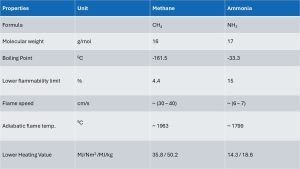
Methane vs Ammonia – Key Fuel Characteristics
Integrating Ammonia into Power Generation
Gas turbines remain a cornerstone of modern power systems, providing flexible and reliable generation. Integrating ammonia into gas turbine operations offers a pathway to significantly reduce carbon emissions while preserving these operational advantages.
Ammonia can be introduced through co‑firing with natural gas, enabling a gradual transition. Higher blending ratios and eventual 100 percent ammonia firing require advancements in combustor design, fuel delivery systems and emission control technologies.
Leading equipment manufacturers are already demonstrating feasibility through pilot projects and commercial development programmes. Importantly, existing gas turbines can be retrofitted for ammonia co‑firing, allowing utilities to decarbonise assets without full replacement.
For power producers, this represents a pragmatic transition strategy – reducing emissions while maintaining grid stability and system reliability.
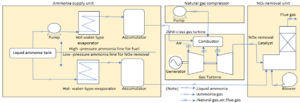
Ammonia Supply System for Gas Turbines
Managing Emissions and Operational Challenges
While ammonia offers clear decarbonisation benefits, its combustion characteristics present technical challenges. Ammonia burns more slowly than natural gas and has a lower heating value, requiring careful combustor design to ensure stable operation.
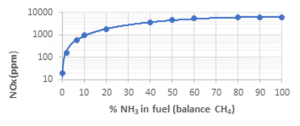
Another critical consideration is nitrogen oxide emissions. Because ammonia contains nitrogen, uncontrolled combustion can lead to elevated NOx levels. However, proven emission control technologies, such as selective catalytic reduction systems, can reduce NOx emissions to acceptable levels.
Extensive testing has shown that with the right design and controls, ammonia can be combusted efficiently, safely and within regulatory limits. Continued research and development will further improve performance and enable higher ammonia blending ratios.
NOx Emissions vs Ammonia Blending Ratio
The Maritime Opportunity
The maritime sector faces increasing regulatory pressure to reduce emissions, particularly under international frameworks targeting long‑term decarbonisation. Long‑distance shipping requires fuels with high energy density and global availability, making the transition especially complex.
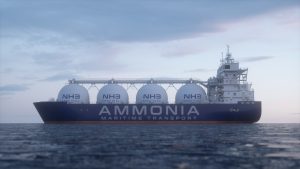
Ammonia is emerging as a promising marine fuel. Its carbon‑free combustion, compatibility with large engines and established transport infrastructure make it suitable for deep‑sea shipping. Engine manufacturers and shipping operators are already developing ammonia‑fuelled engines and pilot vessels.
Challenges remain, including toxicity management, onboard safety systems and the development of bunkering infrastructure. Emission control will also be critical to manage NOx during combustion. However, these challenges are well understood and are being actively addressed through technology development and regulation.
Ammonia as a Marine Fuel
Building the Ecosystem for Adoption
Technology alone will not drive adoption. The successful integration of ammonia into energy and transport systems requires a coordinated ecosystem spanning production, infrastructure, regulation and end‑use applications.
Policy support will be essential. Clear standards, incentives for low‑carbon fuels and support for demonstration projects can reduce risk and accelerate deployment. At the same time, continued investment in research and development is needed to improve efficiency, reduce emissions and optimise system design.
Collaboration across the value chain, between utilities, technology providers, regulators and end users, will be critical to translating potential into reality.
A Pragmatic Path Forward
The energy transition will not rely on a single solution. It will require a portfolio of technologies and fuels, each suited to specific applications. Ammonia offers a practical option for sectors where decarbonisation is most challenging.
By supporting low‑carbon power generation, enabling renewable energy storage and offering a viable fuel for maritime transport, ammonia can play a meaningful role in building a resilient and sustainable energy future.
As industries seek solutions that balance ambition with practicality, green propulsion pathways centred on ammonia represent a significant step forward — grounded in engineering reality, operational experience and long‑term sustainability goals.


