


Explosion-Proof vs Flame-Proof Enclosures: What’s the Difference and Why It Matters
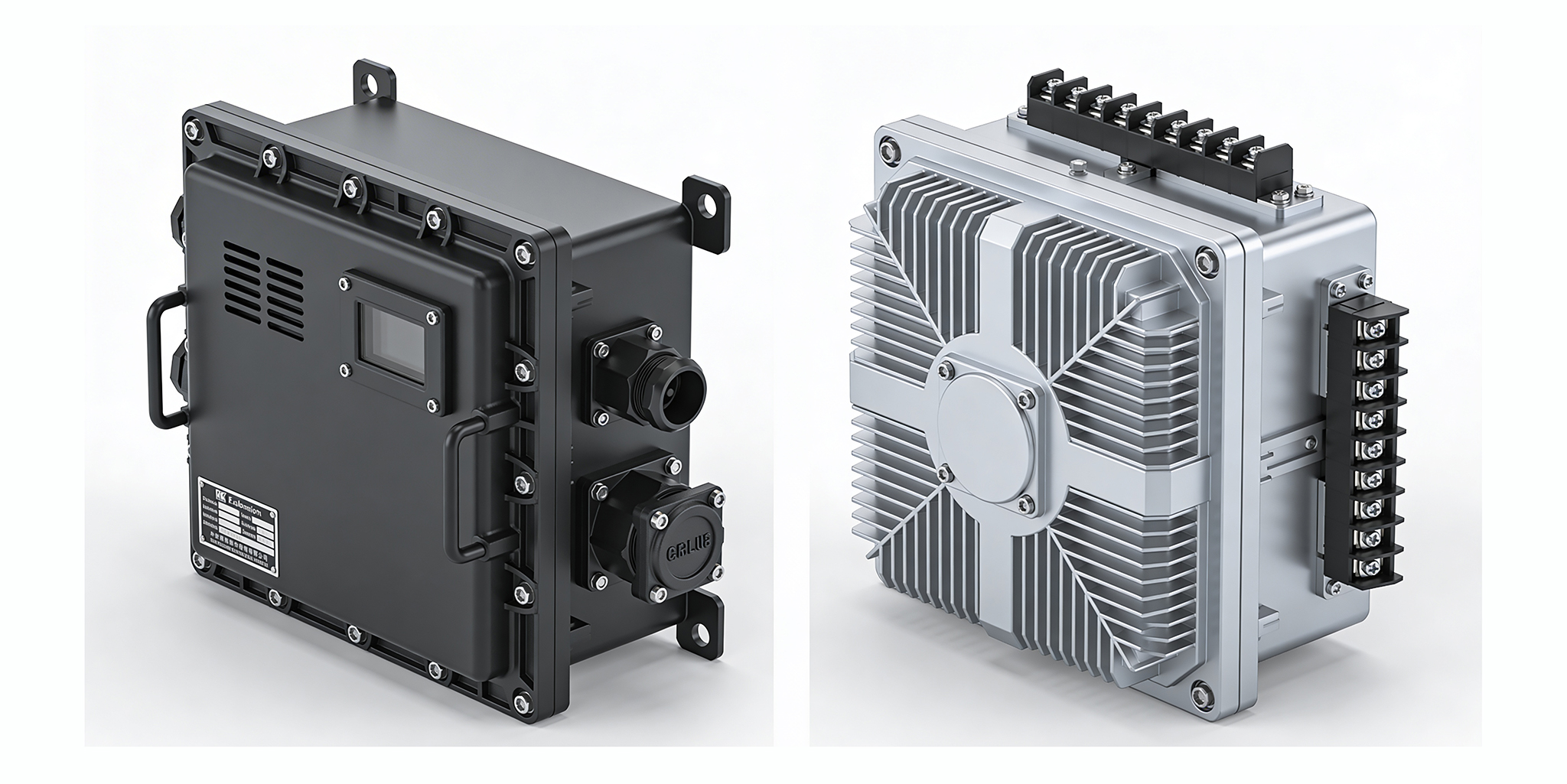
In industries where flammable gases, vapours or dust may be present, even a small electrical spark can pose a serious safety risk. To prevent this, equipment used in such environments is housed in specially designed enclosures. Two commonly used terms for these enclosures are Explosion‑proof and Flame‑proof.
While they are often used interchangeably, these terms originate from different international standards and have specific technical meanings. Understanding the difference helps asset owners, engineers and operators select the right equipment for the right geography and regulatory environment.
What Does “Explosion‑Proof” Mean?
Explosion‑proof is a term primarily used in North America.
An explosion‑proof enclosure is designed to contain an explosion that occurs inside the equipment and prevent it from igniting the surrounding atmosphere.
How this works in practice
If a flammable gas enters the enclosure and ignites internally, the enclosure:
- Withstands the pressure of the explosion
- Allows hot gases to escape only through carefully designed gaps
- Cools these gases so they cannot ignite the surrounding air
In simple terms, the explosion is contained and neutralised within the enclosure.
Where explosion‑proof equipment is typically used
Explosion‑proof enclosures are commonly used for:
- Electrical motors
- Control panels
- Junction boxes
They are widely applied in industries such as oil and gas, chemicals, petrochemicals, mining, pharmaceuticals and food processing.
Applicable standards
Explosion‑proof equipment generally follows NEC and UL standards, including:
- NEC 500 and NEC 505
- UL 1203
- FM 3615
These standards are most commonly applied in the United States and Canada.
How Hazardous Areas Are Classified in North America
To ensure the right equipment is selected, hazardous locations are classified based on the type and likelihood of explosive material being present.
Class and Division system
Under NEC 500, hazardous areas are divided into:
- Class I: Flammable gases or vapours (for example, refineries and chemical plants)
- Class II: Combustible dust (such as grain handling or coal processing)
- Class III: Ignitable fibres (such as textile operations)
Each class is further divided into:
- Division 1: Explosive atmosphere present during normal operation
- Division 2: Explosive atmosphere present only under abnormal conditions
Zone system (NEC 505 / 506)
The Zone system aligns more closely with international standards and categorises areas as:
- Zone 0: Explosive atmosphere continuously present
- Zone 1: Explosive atmosphere likely during normal operation
- Zone 2: Explosive atmosphere unlikely or present for short periods
What Does “Flame‑Proof” Mean?
Flame‑proof is the term used under IEC and ATEX standards, which are followed in most regions outside North America.
From a functional standpoint, flame‑proof equipment serves the same purpose as explosion‑proof equipment: preventing an internal explosion from igniting the surrounding atmosphere.
Key difference for users
The difference lies not in intent, but in:
- Terminology
- Certification approach
- Testing standards
- Regional regulatory acceptance
Flame‑proof equipment is certified under IEC 60079‑1 and related ATEX directives.
Where flame‑proof equipment is commonly used
Flame‑proof enclosures are widely used across:
- Europe
- Asia
- Middle East
- Australia
They are applied in the same industries as explosion‑proof equipment, including oil and gas, chemicals, mining, pharmaceuticals and food processing.
How Flame‑Proof Equipment Is Certified Internationally
Key regulatory frameworks
- IEC (International Electrotechnical Commission)
- ATEX (European Union)
- IECEx (International certification scheme)
ATEX directives
- ATEX 2014/34/EU: Equipment used in explosive atmospheres
- ATEX 1999/92/EC: Workplace safety requirements
Typical marking explained
An example marking such as II 2 G Ex d IIB T4 Gb indicates:
- The industry type
- The zone of use
- The enclosure type (Ex d = flame‑proof)
- The gas group and temperature class
- The level of equipment protection
This marking allows users to quickly verify where and how the equipment can be safely used.
How Explosion‑Proof and Flame‑Proof Approaches Compare
While the terminology differs, both enclosure types:
- Contain internal explosions
- Prevent ignition of external hazardous atmospheres
- Require strict testing and certification
Key distinctions include:
- Explosion‑proof is used mainly in North America under NEC/UL/FM standards
- Flame‑proof is used internationally under IEC/ATEX standards
- Explosion‑proof equipment typically undergoes more severe explosion testing
- The IEC Zone system provides more granular classification than the NEC Class & Division system
Why This Distinction Is Important
For asset owners and project teams, selecting the correct enclosure type is not just a technical decision. It affects:
- Regulatory compliance
- Equipment certification
- Project approvals
- Long‑term operational safety
Understanding whether a project falls under NEC or IEC standards ensures that equipment is specified correctly from the design stage itself.


